
The Fragrance Wheel Explained: How to Choose the Right Scent Family for Your Product
What is the fragrance wheel?
The fragrance wheel is a classification system that helps organise scents into families based on their dominant olfactory character. It groups related fragrance types next to each other, so you can see at a glance which scents share DNA and which sit at opposite ends of the spectrum.
At Fragrance Engineering, we use a 12-family wheel built around four core note categories: Floral, Ambery, Woody and Fresh. Every fragrance we develop for Australian manufacturers maps back to this wheel.
If you are briefing a fragrance for a candle, cleaning product, personal care range or fine fragrance, the wheel is the fastest way to get your team and your supplier speaking the same language.
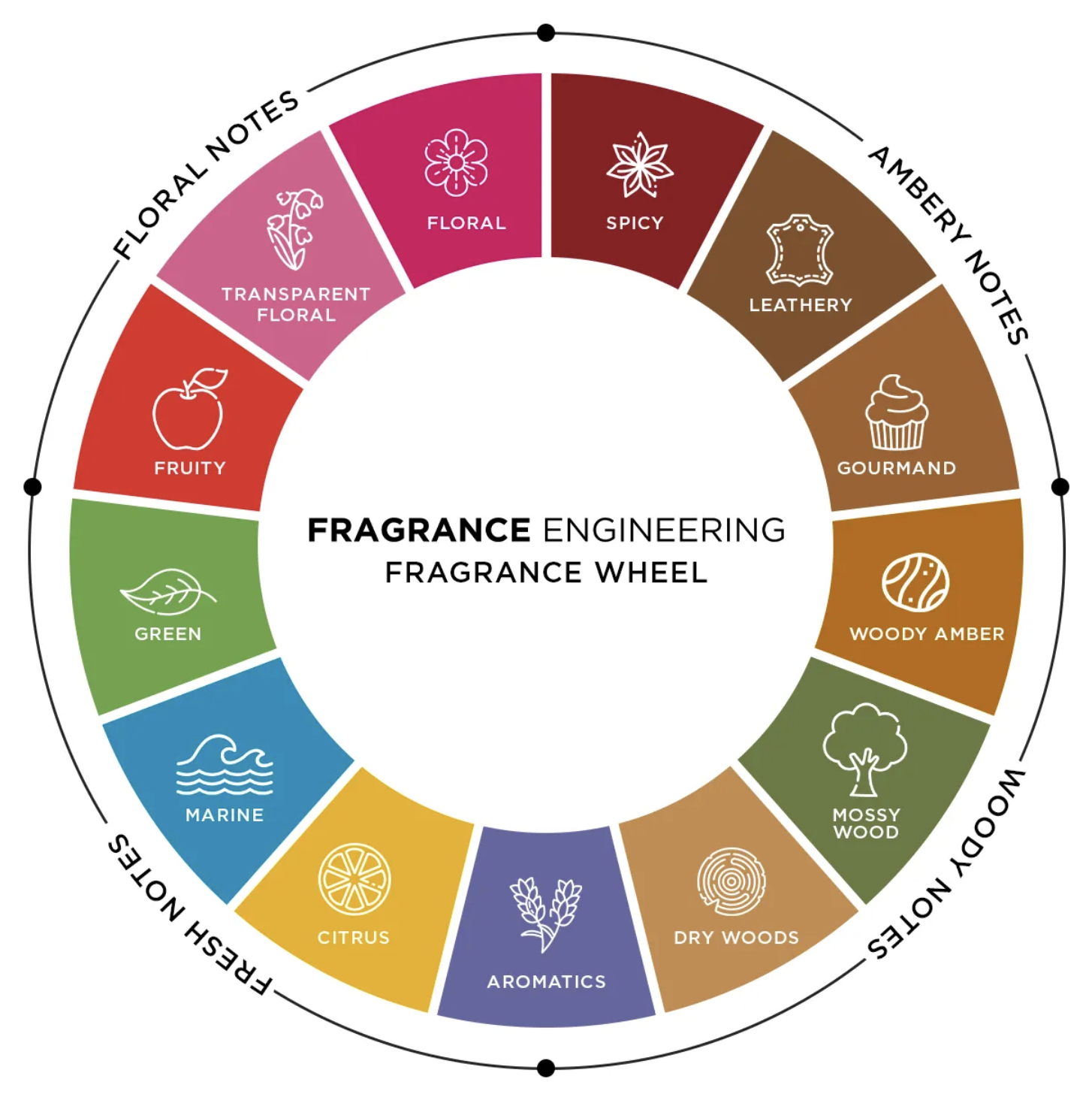
The four core note categories
Floral Notes
Floral is the largest and most commercially popular category in fragrance. It covers everything from a single rose accord to complex bouquets.
Floral. Classic petal-driven scents. Rose, jasmine, peony, frangipani. The backbone of personal care and fine fragrance.
Transparent Floral. Lighter, airier florals with a clean, watery quality. Think lily of the valley and soft musks. Ideal for laundry care and skin-safe applications where subtlety matters.
Fruity. Juicy, sweet and approachable. Apple, berry, peach and tropical accords. Strong performers in body care, air care and youth-focused brands.
Ambery Notes
Formerly called "oriental" in older classification systems, ambery notes bring warmth, depth and richness.
Spicy. Star anise, cinnamon, clove and pepper. Adds intrigue and works well in seasonal ranges and masculine profiles.
Leathery. Smoky, rich and textural. A niche family gaining traction in premium candles and fine fragrance.
Gourmand. Edible-inspired notes like vanilla, caramel and baked goods. Consistently one of the strongest categories in home fragrance.
Woody Amber. Resinous warmth with woody structure. The bridge between ambery and woody families, and a staple base for long-lasting scents.
Woody Notes
Woody families provide structure, longevity and a grounded finish. They are the workhorses of base notes.
Mossy Wood. Earthy, green-tinged woods. The foundation of chypre-style fragrances.
Dry Woods. Cedar, vetiver and smoky woods. Clean-lined and modern, popular in unisex and masculine profiles.
Aromatics. Lavender, rosemary, sage and herbal accords. Sits between woody and fresh, and dominates the fougère family used across grooming and cleaning products.
Fresh Notes
Fresh families signal cleanliness, energy and lift. They are essential for cleaning and commercial chemical applications, laundry and air care.
Citrus. Lemon, bergamot, orange and grapefruit. The universal signal of clean.
Marine. Sea air, ozone and aquatic accords. Delivers a crisp, open freshness.
Green. Cut grass, leaves and stems. Natural, crisp and increasingly relevant as consumers seek botanical-led scents.
Why the fragrance wheel matters for product development
The wheel is more than a reference chart. It is a briefing and development tool.
It sharpens your fragrance brief. "Something fresh but warm" is vague. "A citrus opening on a woody amber base" is a brief a perfumer can act on. Precise family language cuts development rounds and gets you to a winning sample faster.
It reveals blending logic. Neighbouring families on the wheel blend naturally. Citrus flows into green. Gourmand deepens into woody amber. Families opposite each other create contrast, which is where distinctive signature scents often live.
It keeps your range coherent. Mapping your existing SKUs to the wheel shows gaps and overlaps. If your entire candle range sits in gourmand, the wheel shows you exactly where to extend next.
It connects you to market data. Consumer search trends track directly to fragrance families. When search interest in a note rises, the wheel tells you which adjacent families will benefit next. This is how we identify emerging scent directions before they peak.
How Australian manufacturers use the wheel in practice
A typical development path looks like this:
Define the application. A fragrance for a soy candle behaves differently to one for a surface spray or a body wash. Application shapes which families perform.
Select a lead family. Anchor the brief to one family from the wheel based on your brand positioning and target customer.
Add a supporting family. Choose a neighbouring family for harmony or an opposing one for contrast.
Test against the market. Validate the direction against current search and category trend data before committing to production volumes.
This process applies whether you are developing for personal care, home fragrance, cleaning products, laundry, pet care or contract manufacturing.
Frequently asked questions
Who created the fragrance wheel? The modern fragrance wheel was developed by fragrance taxonomist Michael Edwards in 1983 and has been refined since. Fragrance houses adapt the core concept to suit their own palettes and applications. The Fragrance Engineering wheel uses 12 families organised under Floral, Ambery, Woody and Fresh notes.
What is the difference between a fragrance family and a fragrance note? A note is an individual scent ingredient, such as bergamot or sandalwood. A family is a group of related notes that share an overall character. Families sit on the wheel. Notes sit inside families.
What is the most popular fragrance family in Australia? It depends on the category. Gourmand and woody amber dominate home fragrance. Fresh families lead in cleaning and laundry. Floral remains the strongest performer in personal care. Trend data shifts season to season, which is why we track it continuously.
What are ambery notes? Ambery is the updated industry term for the family previously called oriental. It covers warm, rich profiles including spicy, leathery, gourmand and woody amber scents.
Can two fragrance families be combined? Yes. Most commercial fragrances combine two or more families. Neighbouring families blend smoothly, while opposing families create contrast and distinctiveness.
See which families are trending right now
The wheel tells you what the families are. Our seasonal trends deck tells you which ones are moving.
The latest Fragrance Engineering Trends Deck (Issue 01, Winter 2026) breaks down the scent directions gaining momentum across Australian personal care, home fragrance, cleaning and fine fragrance, backed by global search data and category analysis. It includes the specific notes rising within each family and what that means for your next product brief.
[Download the FE Trends Deck] and put the wheel to work on your next development.
